14453 Beach Blvd., Suite 100, Jacksonville, FL 32250 904-992-8900

Implants & Dentures
Do you have missing teeth? It is critically important to replace them. Eating and chewing with missing teeth can compromise your bite and lead to ongoing discomfort. Missing teeth can also lead to a shifting of the surrounding teeth, often resulting in changes to the appearance of the face over time.
Whether you are missing one tooth or several, dental implants are the most natural and longest-lasting tooth-replacement option available today. Learn more about how implants work on our Dental Implants overview.

A single tooth implant procedure may be done if a tooth has been extracted or is missing. A titanium implant base is placed into the jawbone to resemble the tooth root. We allow a period of time for the jawbone to heal over the implant base before fitting for a crown.
Next, an abutment is screwed into the base of the implant to allow for a crown to be fitted on top. Finally, a custom-fabricated crown is placed over the abutment to function like a real tooth.
Looking at less-permanent options? See bonded bridges or fixed bridges.

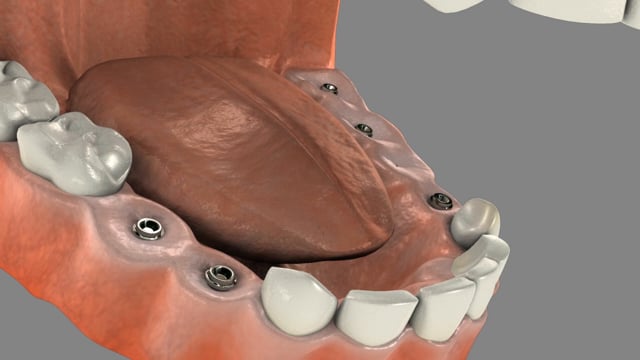
Multiple tooth implants may be placed if you need or desire to permanently replace several extracted or lost teeth. Titanium implant bases are placed into the jawbone to replace the job of the tooth roots. We allow a period of time for the jawbone to heal over the bases before fitting for crowns.
Next, abutments are screwed into the bases of the implants to allow crowns to be attached. Finally, custom-fabricated crowns are placed over the abutments and will function like real teeth.
Missing all the teeth in an arch? See Full Arch Implants or Implant-Supported Dentures.
Replacing a single tooth or a few teeth with implants offers several lasting advantages over a bridge or partial denture.
A side-by-side look at implants, fixed bridges, and partial dentures to help you weigh the trade-offs.
| Option | Best For | Lifespan | Trade-offs |
|---|---|---|---|
| Implant | One or several missing teeth, in patients with healthy bone | Designed to last a lifetime | Higher initial cost; surgical procedure required |
| Fixed Bridge | One or several missing teeth, when adjacent teeth need crowns anyway | 7-10 years | Requires grinding down healthy neighboring teeth |
| Partial Denture | Multiple missing teeth, when budget is the primary factor | About 5 years | Removable; clasps stress neighboring teeth; bone loss continues |
Want a deeper comparison? See our full Dental Implants overview.
Call our office or request an appointment online - we'll find a time that fits your schedule.