
14453 Beach Blvd., Suite 100, Jacksonville, FL 32250 904-992-8900

Restorative Care
A crown rebuilds a tooth that's broken, weakened, or worn. A filling restores a tooth that has decay or a small fracture.
Both are everyday tools of restorative dentistry - and at Azari & Zahedi Dentistry, we use modern materials that look natural and feel like part of your own smile.

A crown procedure usually requires two appointments. Your first appointment will include taking several highly accurate molds or impressions that will be used to create your custom crown. A mold will also be used to create a temporary crown, which will stay on your tooth for approximately two weeks until your new crown is fabricated by a dental laboratory.
While the tooth is numb, the dentist will prepare the tooth by removing any decay and shaping the surface to properly fit the crown. Once these details are accomplished, your temporary crown will be placed with temporary cement and your bite will be checked to ensure you are biting properly.
At your second appointment, your temporary crown will be removed, the tooth will be cleaned, and your new crown will be carefully placed to ensure the spacing and bite are accurate.
You will be given care instructions and encouraged to have regular dental visits to check your new crown.

If your smile is in need of a makeover, crowns can provide predictable results. Crowns can give an unattractive tooth back its beautiful shape and color. For smaller or worn-down teeth, a crown can restore the natural size of the old tooth. A crown can replace either part of or the tooth's entire structure. For procedures requiring only the areas visible from the outside, a veneer may be an alternative option.
With today's advances in dentistry, there are several options when choosing a type of crown - porcelain outer surface with a metal base, pure porcelain or composite, or all-metal, usually gold. They all differ in durability, strength, appearance, and cost.
Very aesthetic, bonded crowns. Mostly used for front teeth because they are the most natural looking type of crown and are often used in cosmetic dentistry.
There are many types, but they all have a common feature - no metal. They can occasionally break, but dental technology has advanced far enough to make them quite strong.
The most common type of crown, with a proven track record. PFM crowns are fairly aesthetic and they look like real teeth. However, the margins or borders may appear dark because PFM crowns have a metal substructure with layers of porcelain fired over it.
Porcelain is very hard - much harder than natural enamel - and may cause excessive wear of opposing teeth or break with extreme biting forces.
The "gold" standard. Dental gold is about 60% gold alloy, which is meant to match the hardness of the enamel of opposing teeth so both wear about evenly.
Gold crowns are strong and will not break. They are not aesthetic, so they are usually used for lower back molars where they are less noticeable.
An excellent fit for restoring molar teeth on select candidates. We offer Zirconia crowns on the upper front teeth when there is insufficient tooth structure for bonding.
The material is biocompatible and is the next generation in pediatric restorative technology. We will discuss your child's specific assessment in more detail during a consultation.
Replacing missing or damaged front teeth with a pediatric partial is a service we offer our patients for comfort and convenience. Children are prone to lose teeth even early in life. Whether due to dental disease, a playground, or a bathtub accident, premature loss of teeth is an unavoidable part of childhood.
Some parents may be unsure how to approach replacing missing teeth at this stage, and knowing this option is available is comforting to them.
The advantages of a pediatric partial for children are:
The process usually requires two visits to complete - first for the mold and fabrication, and the second for insertion. A pediatric partial is a fixed appliance, and children can't remove it unless they apply excessive force. We will monitor the area, and when it comes to the near eruption of permanent teeth, usually around age seven, we will remove it.
Maintaining good oral hygiene and periodic visits to Azari & Zahedi Dentistry help with the longevity and aesthetic of the appliance.
Learn more about our Pediatric Services with Dr. Marzieh Zahedi.

Tooth-colored fillings, white fillings, and composite resin fillings are all names for the high-strength, natural-looking fillings that can be placed today instead of silver or gold, also known as amalgam fillings.
No matter what the name, Azari & Zahedi Dentistry will know just what you're talking about when you refer to this natural-looking filling.
Call us at 904-992-8900 or request an appointment online so we can discuss the benefits of white fillings and how they can help improve your smile.
White fillings are made from a high-strength composite resin that can be easily color-matched to your natural tooth, making it nearly invisible to you and anyone else.
Unlike silver and gold fillings, composite tooth-colored fillings actually bond to the tooth - which means they support the surrounding tooth structure, helping to prevent breakage and insulate the tooth from excessive temperature changes. You are also much less likely to have a composite filling fall out, which is a common issue with metal fillings.
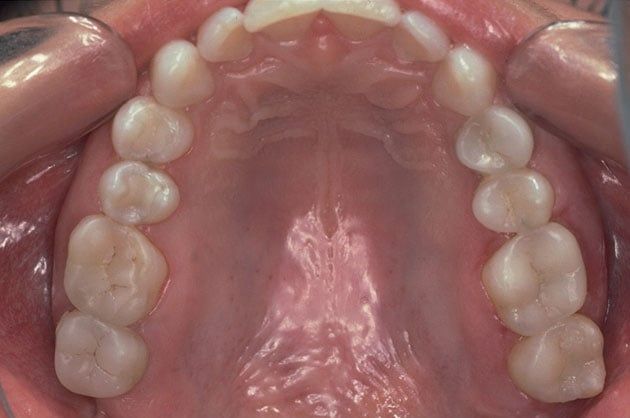
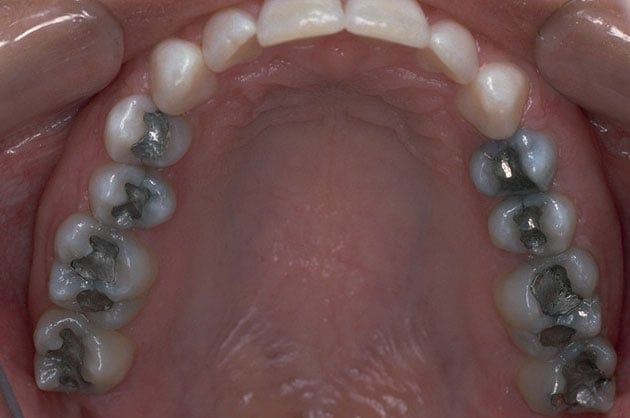
Azari & Zahedi Dentistry specializes in beautiful cosmetic dentistry. Metal fillings are often thought of as an eyesore - especially with the front teeth that are visible to everyone when you smile. We are able to remove those old metal fillings and replace them with today's white fillings, which are nearly identical in color to the teeth that they are in.
Virtually everyone is a candidate to have metal fillings replaced with natural-looking white fillings. Request an appointment online or call our office directly at 904-992-8900 to discuss replacing your old metal fillings with white ones.
Silver and gold fillings have been around for a very long time, and to this day they do an adequate job of filling teeth. Today's white fillings are, by far, a patient's first choice when it comes to any kind of dental procedure that requires a filling because of their natural cosmetic benefits. This doesn't mean white fillings are the best choice in every situation; metal fillings still have their own benefits.
Metal fillings, also known as amalgam fillings, are very strong and do not wear out as quickly as composite white fillings. In situations where a tooth requires a large filling and other treatment options such as porcelain crowns are not desired, a metal filling might be your best treatment option because of the structural qualities of the metals themselves - and composite fillings generally can't withstand the forces exerted on them if they have to cover a very large area.
Metal fillings generally cost less than natural-looking fillings, and patients that need fillings in any out-of-sight teeth often consider a metal filling.
There are four different choices that you have when it comes to filling a cavity.
Natural tooth-colored filling; bonds to the tooth to provide added security.
Inexpensive and strong, amalgam-based filling.
More attractive than silver and provides for a better fit.
Also called inlays; the most attractive and durable of the tooth-colored choices.
As with every dental procedure, prices vary depending on each person's unique treatment situation, but white fillings generally cost more than metal fillings.
Most patients report back to us that the advantages of white fillings outweigh the price differences because of their natural appearance and unique ability to bond to the teeth.
If you are thinking about replacing your old metal fillings with natural-looking white fillings, please call us at 904-992-8900 or request an appointment today. We'll get you in and go over everything needed to get you on your way to a much more natural-looking smile.
See accepted insurance and financing options on our New Patient Info page.
Many dental insurance plans cover the price of white fillings up to that of metal fillings.
Azari & Zahedi Dentistry will gladly check with your dental insurance provider to see just how much they will cover and help you experience white fillings for yourself.
Modern dentistry has given dentists a new and less painful way of repairing cavities. The LightWalker is a minimally invasive laser that puts much less stress on the patient by being quieter, with no drilling noise, and most procedures performed with the LightWalker do not need numbing - which means fewer injections and little or no pain and bleeding.
After treatment, overall there is reduced swelling and need for medication, making the experience much more relaxed and pleasant for our patients.
Learn more about our office technology, including the Fotona LightWalker laser, on our Our Office & Technology page.
Call our office or request an appointment online - we'll find a time that fits your schedule.